14 August 2026 · Shaun O'Neill
More Than a Morning Tea: Booking Well for MHAW 2026
Mental Health Awareness Week runs 12–18 October 2026. Before you book a speaker, work out what happens on the Monday. Here's how to get it right.
More Than a Morning Tea: Booking Well for Mental Health Awareness Week 2026
Mental Health Awareness Week runs from 12 to 18 October 2026, and the theme is Belonging Matters. If a speaker is on your plan for that week, the most valuable decision you'll make isn't who stands on the stage. It's what your organisation does on the Monday afterwards. Essential Talent is a New Zealand speaker bureau, and this is the booking we'd rather you got right than got quickly.
When is Mental Health Awareness Week 2026 in New Zealand?
Mental Health Awareness Week 2026 runs from 12 to 18 October. The theme is Belonging Matters, drawn from the whakataukī Ko au ko koe, ko koe ko au: I am you, and you are me. The Mental Health Foundation of New Zealand runs the campaign with support from Health New Zealand | Te Whatu Ora.
The Foundation has held MHAW in Aotearoa every year since 1993, and awareness weeks now run in more than 150 countries. Dates and theme confirmed at the official MHAW site.
One practical note. A number of calendar sites and inclusion planners still show September dates for 2026. October 12 to 18 is correct. Check what your HR calendar is telling people before invitations go out.
Should you book a mental health speaker for Mental Health Awareness Week?
Only once you know what a manager will say when somebody comes to them afterwards. A strong wellbeing keynote does one thing very reliably: for about an hour, it makes speaking up feel safe. That hour is genuinely valuable. It also creates disclosures, and disclosures need somewhere to land.
We'd rather sell you a booking than talk you out of one, so take this as it's meant. A talk that moves a room and then leads nowhere teaches your people something worse than silence would have. It teaches them that raising a hand here produces a nice moment and nothing else.
The readiness gap in New Zealand workplaces is documented. A 2018 Seek survey found only 37% of workplaces were known by their own staff to have any mental health policy, and 27% of respondents admitted lying about taking a mental health day. Sort out the receiving end first. The speaker is the second decision, not the first.
What does "Belonging Matters" mean for a workplace event?
It points at your culture rather than at individual resilience. Belonging is about whether people feel connected and included where they already are, which makes it a design and leadership question, not a coping-skills one.
The research behind the theme matters here. The Mental Health Foundation notes rising loneliness in Aotearoa and cites Helen Clark Foundation work from 2026 finding just 53% of New Zealanders agree their neighbourhood has a strong sense of community.
Read that against your own operating model. Hybrid weeks, regional teams, shift patterns, contractors who've never met the people they email daily. If your organisation spans Auckland, Hamilton and Ōtautahi Christchurch, belonging isn't a theme you're borrowing for a week. It's a description of a problem you already have.
Which argues for a format decision, not just a speaker decision. Belonging is built by people talking to each other, so a facilitated session often outperforms a keynote where 200 people sit facing the same direction in silence. Ask about workshop facilitators before you assume the answer is a stage.
What should you put in the brief?
Most of these bookings succeed or fail here. A speaker who understands your context can pitch the room correctly. One who doesn't will deliver a perfectly good general talk into a room with a very specific history.
Include:
What's actually happened here. Restructure, redundancy round, a death, a serious incident, a rough engagement survey. Say it even when it's awkward. This is the single most useful thing in any brief.
Who's in the room, and whether they had a choice about being there. A compulsory all-staff session and an opt-in lunchtime one are different audiences needing different talks.
What support exists, and what you're willing to name aloud. EAP details, named contacts, whether managers have had any training at all.
What you want to be different afterwards. "Raise awareness" isn't a brief. "We want team leaders to feel able to ask a direct question" is.
The slot and what surrounds it. A wellbeing keynote scheduled immediately before an operating model update is a mistake you can fix at run sheet stage for free.
Whether you're recording. People disclose differently with a camera running. Tell the speaker, and tell the room.
Which type of speaker suits which room?
Four distinct shapes, and they're not interchangeable. Matching shape to room matters more than matching name to budget.
Shape | Strongest for | Where it struggles | On our roster |
|---|---|---|---|
Lived experience storyteller | Reducing stigma, making disclosure feel possible, large all-staff audiences | Rooms that need practical management tools | Jehan Casinader, journalist and author who has written publicly about depression |
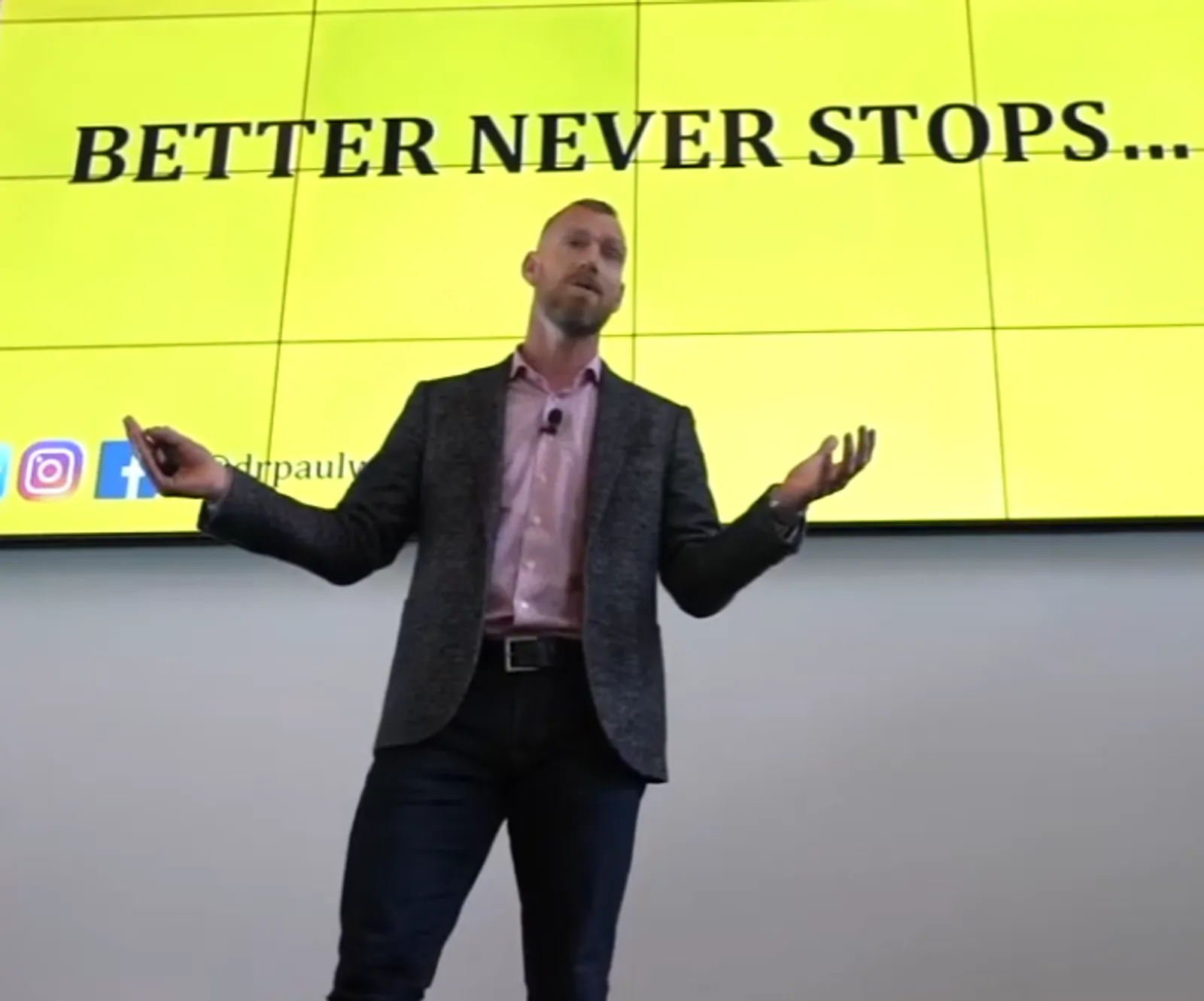
Research-backed practitioner | Credibility with sceptical, technical or executive audiences | Rooms that need emotional permission before evidence | Dr Paul Wood, PhD in psychology |
Performance coach | Teams under sustained pressure, leadership groups, high-stakes environments | Can frame distress as a performance problem if briefed carelessly | Gilbert Enoka, mental performance coach |
Workshop facilitator | Belonging, connection, teams that need to talk rather than listen | Large audiences and tight conference slots |
The mismatch we see most often: a lived experience speaker booked for a room that actually needed manager training. The session lands beautifully. People are moved. Nothing changes, because nobody in the audience was given anything to do on Tuesday.
When should you book for October 2026?
Now, if you want a choice. Wellbeing speakers are among the fastest categories to close out in New Zealand, because every organisation in the country wants the same fortnight, and that fortnight sits inside the busiest month of the events year.
A speaker is an excellent use of Mental Health Awareness Week when they open something, and a poor one when they are the whole thing. The New Zealand numbers are encouraging where organisations follow through: a Hearts and Minds cost benefit analysis found a return of at least $4.70 for every $1 spent on early intervention. That return comes from the system around the talk, not from the talk.